About us
The Department of Environmental and Earth Sciences (DISAT) was established on October 1, 2012, through the merger of the pre-existing Departments of Environmental and Land Sciences and Geological Sciences. As of February 1, 2024, DISAT comprises 43 geologists, 25 biologists, 19 chemists, 4 physicists, 3 engineers, and 2 agronomists, belonging to 30 different scientific-disciplinary sectors, as well as 28 technicians. The educational, scientific, and third mission/social impact objectives of DISAT are aimed at developing an interdisciplinary approach to the study of environmental evolution and the Earth system, and at disseminating these issues in the public domain and among citizens.
Study
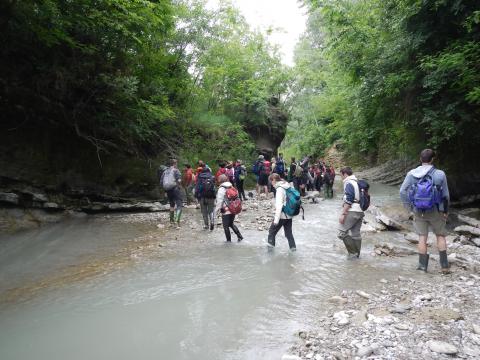
The Department provides a comprehensive academic offering, encompassing two Bachelor's, four Master's, and two Ph.D. programs.
The two open-access Bachelor's degree programs offered by the Department are: Environmental Sciences and Technologies, and Geological Sciences and Technologies.
Out of the four Master's degree programs offered by the Department, two are international:
- Economics and Technologies for Sustainability (International)
- Marine Sciences (International)
- Environmental and Territorial Sciences and Technologies
- Geological Sciences and Technologies
At the doctoral level, the Department offers the Ph.D. program in Chemical, Geological, and Environmental Sciences, as well as the Ph.D. program in Marine Sciences: Technologies and Management.
All degree programs benefit from spacious, state-of-the-art laboratories and extensive fieldwork opportunities, ensuring an up-to-date, high-quality training that enriches the student experience.
Research
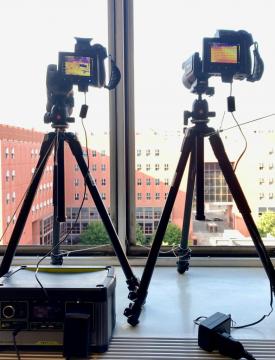
Starting from its name, DISAT declares its objectives in the scientific field: to develop and improve research both in environmental and geological domains, maximizing synergies between the two areas. To this end, in full coherence with the University's guidelines, 7 main research areas have been identified, which completely transcend the disciplinary sectors and are instead based on the affinities of research interests and complementarity of scientific approach, encompassing the activities developed by individual research groups of DISAT, also within the context of the "Departments of Excellence 2023-2027" project. The multi-, inter-, and trans-disciplinarity of research is therefore a distinctive element of DISAT, and the level of scientific activities conducted at the Department has been judged very positively in the recent rounds of Research Quality Evaluation; ANVUR has indeed attributed the maximum value of the Standardized Departmental Performance Indicator (ISPD = 100/100) to DISAT following the last VQR cycles (2011-2014 and 2015-2019).
Third mission and social impact
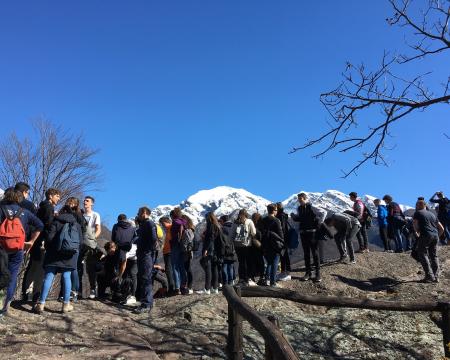
DISAT has several ongoing projects aimed at valorizing research products through various patent applications with industrial partnerships. It is well integrated with entrepreneurial activities in the region, providing a wide range of analytical services. The Department's staff and its laboratories (some of which are of European excellence) have several agreements for third-party activities with external public and private clients. The staff also provides high-profile consultancy services for foreign entities and institutions and contributes to the training and updating of skills for workers and professionals.
DISAT's presence in Public Engagement is equally remarkable, with constant participation in major scientific dissemination events at various levels (local, national, and inter/ supranational, totaling 100 participations in 2023 alone) and significant production of publications dedicated to disseminating scientific topics relevant to environmental and earth sciences to the general public. Furthermore, the Department has a consolidated tradition in guiding high school students, both at the university and national levels, through the "Scientific Degree Plan" project. In this context, DISAT is tasked with coordinating orientation initiatives for Chemical Sciences in Italy.